Outdated Vehicle Regulations Stifle Sri Lanka’s Electric Vehicle Market
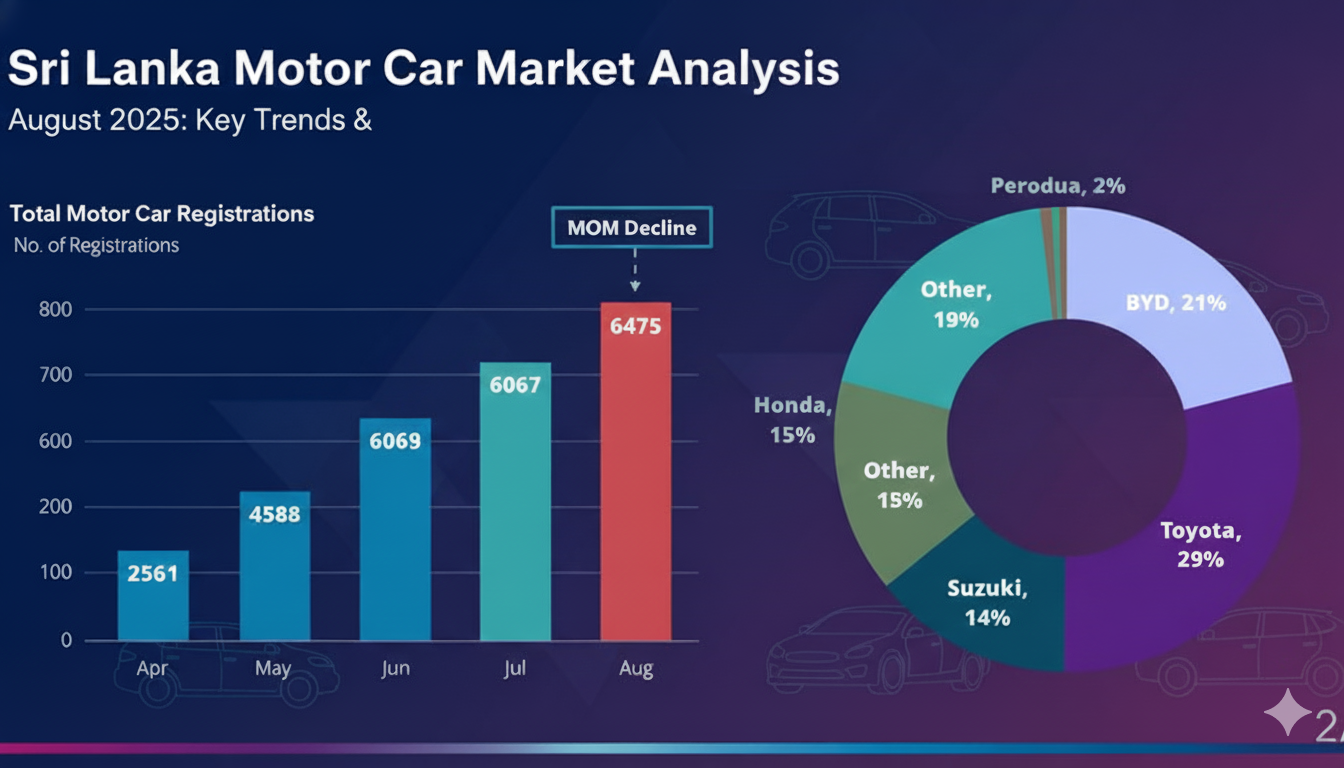
Despite a resounding global transition toward zero-emission vehicles, Sri Lanka’s adoption of Electric Vehicles (EVs) remains hampered by an enduring web of bureaucratic red tape and restrictive import policies. While the global electric vehicle market saw over 7 million units sold in the first half of 2024—comprising 17% of light-duty vehicle sales—Sri Lanka’s experience is one of stalled progress. Even with EVs holding a notable 15% share of the country’s brand-new vehicle registrations, this figure coexists with poor overall reception, primarily due to heavy import restrictions that choke the sector’s potential for sustainable growth.
Obsolete Taxation and Regulatory Roadblocks
The foundational issue lies in Sri Lanka’s outdated regulatory framework. EVs were introduced in the country as early as 2013, yet the tax structures failed to adapt to the new technology, defaulting to the system used for Internal Combustion Engine (ICE) vehicles. Consequently, EVs are taxed based on motor capacity according to Sri Lanka Customs guidelines. This system is problematic because in an EV, the motor, motor controller, and drivetrain function as an integrated unit for output, making the single-factor “motor capacity” criteria for taxation unfair and, in essence, technically inapplicable. The difficulties were further compounded by a sweeping ban on all vehicle imports, imposed in early 2020 and only lifted with effect from February 1, 2025, which severely curtailed the emerging EV and hybrid market.
Exposing Policy Failure
The high taxation and regulatory ambiguities were thrust into the national spotlight following a major controversy involving a fleet of BYD Atto 3 vehicles held up at Customs. The dispute centered on the criteria for import clearing, as the importer’s declaration of a lower-rated motor capacity, achieved through a manufacturer’s software limitation (a common global practice), was challenged by Customs which appeared to insist on taxing based on the motor’s full physical capacity. Although a temporary resolution allowed for the release of part of the fleet, the fundamental issue persists, and the required regulatory review remains desperately needed. This incident served as a critical eye-opener, underscoring the necessity to completely restructure the vehicle import regulatory system to accurately and fairly accommodate modern automotive technology.
The Imperative for Policy Reform
Sri Lanka is committed to achieving sustainable development goals, including a 14.5% reduction in greenhouse gas emissions by 2030 and Carbon Neutrality by 2050. Sustainable transportation, with EVs being a cornerstone alongside public transport, cycling, and walking, is crucial to meeting these Nationally-determined Contributions (NDCs). The country’s current reliance on the manufacturer’s certificate for customs clearance is a standard practice globally (as seen in Singapore and Vietnam), and the challenge lies in ensuring a technical committee appointed by Customs can accurately and consistently assess motor capacity without overriding globally accepted manufacturer specifications. If the vehicle importation criteria had been proactively updated to align with global technical and market trends, it would have been beneficial for the government, entrepreneurs, and consumers alike. Sri Lanka must move decisively to prevent the vehicle import sector from becoming yet another crisis that requires retrospective policy-making. A fair, transparent, and technically informed regulatory system that applies equally to all imported vehicle categories is vital for steering the nation towards a sustainable and prosperous future.